

This page is ONLY for the Primo Viaggio 4-35, not the Primo Viaggio 30/30 which is is a completely different seat and hasn’t been made for several years. The 30/30 had a 5 year expiration date, so most of them have by now expired since that seat hasn’t been made for a while.
The 4-35 and 4-35 Nido are the same carrier except the Nido has a larger sun canopy. The Nido base is different in that it adds a larger anti-rebound bar and a load leg. Otherwise, the 2 seats are the same.
The carrier offers a European belt path – but some seat belts will be too short to accommodate this path using the routing shown in the video above – so you’ll want to try the routing shown in the video below if your belt seems too short. The lap belt guides for the vehicle’s seat belt when installing the carrier without the base are located on the handle – rather than on the shell of the car seat as with most other seats. The handle acts as an anti-rebound device when installing the carrier without the base. 4-35 installed without base (European belt path)European Belt Path


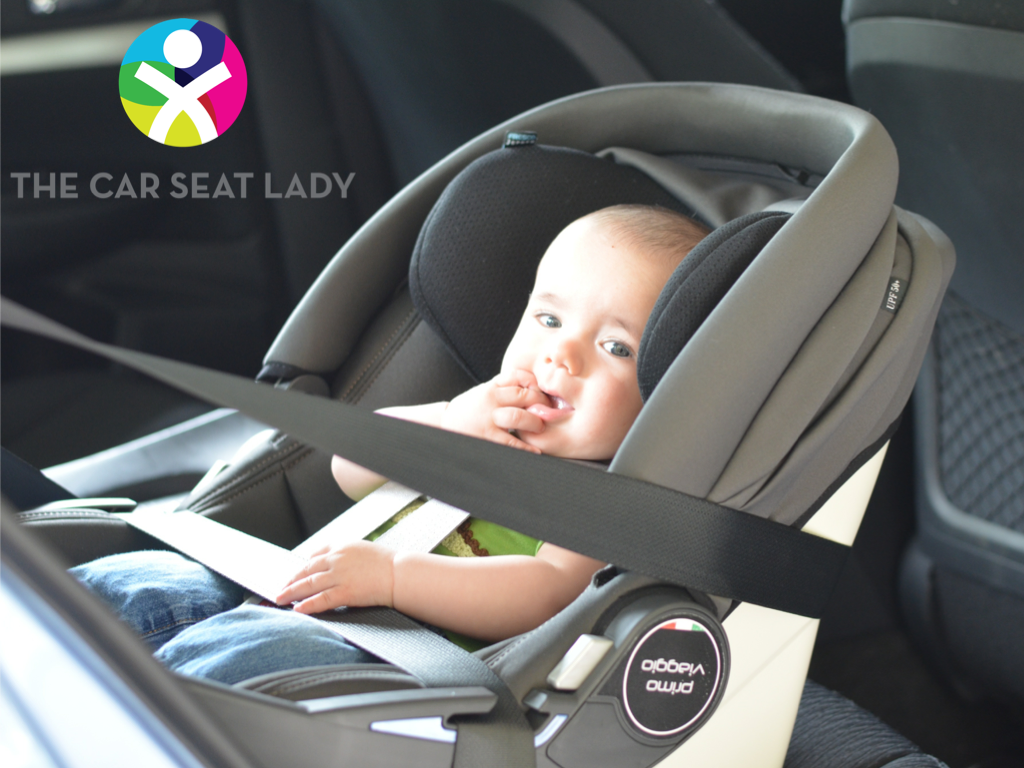
The seat features a no-rethread harness with straps that tighten and loosen smoothly – but they would be even smoother if the chest clip moved up/down a little more easily though. The straps twist an average amount – and can be untwisted using the triangle trick shown below. The two-stage infant insert offers a very good fit for even the tiniest preemies. Make sure to take out the Stage 1 insert by 8 pounds, or so, as it is really meant for the smallest of babies. Leave the Stage 2 insert in for another few months and remove when the crotch buckle tongues seem to be too close to the baby’s thighs.Harness & Fit


Shoulder Strap Covers: These are never required, and we recommend removing them from day one. Stage 1 insert: This is an insert designed for the smallest babies – those 4-7 pounds typically. This insert can ONLY be used with the head rest in the lowest position. Most babies will outgrow Stage 1 by about 8 pounds (so yes, Stage 1 will never be used by a large newborn).You’ll know to take Stage 1 out because the shoulder straps will start to come so far below the shoulders that they slide off and won’t stay on the shoulders. You’ll also know to take Stage 1 out as the crotch buckle tongues will likely start digging into the sides of the baby’s thighs. To remove Stage 1, unbutton the two buttons at the top of the Stage 1 insert. Stage 2 insert: This insert will be used for approximately 6 months. You’ll know to take Stage 2 out when the crotch buckle tongues are again starting to dig into the sides of the baby’s thighs – or the baby’s head is getting too close to the top of the car seat. When you remove Stage 2, you will most likely need to LOWER the head rest a notch or two – making sure the shoulder straps come from at or slightly below the child’s shoulders.Removable Inserts & Pads

When the seat is used in the base, the handle must be in the travel position. When the seat is used without the base, the handle must be in the anti-rebound position – as the vehicle’s seat belt gets routed through the handle.


The taller the adults sitting in front, and/or the smaller the back seat is, the more attention you’ll want to pay to this image below. Many parents are shocked by how much room a rear-facing car seat can take up into the front seat’s territory.Room into the Front Seat

The seat belt and LATCH installation typically work similarly well due to the “right tight lock-off” which helps further tighten the belt a little bit. We do find that in some cars the seat belt yields a more secure installation than LATCH – and vice versa – so if at first you don’t succeed, try the opposite method. There will be some vehicles where it will not be possible to get a secure installation with this seat – typically those that have a seat belt buckle that is higher than average, or lower anchors (LATCH) that are higher in the vehicle’s seat crack than is typical, or vehicles with a significant bump in the seat cushion where the part you sit on meets the part your back is on. This base can often work well in a 3-across scenario. If you are in an SUV or minivan, the seat back recline trick tends to work well due to the anti-rebound device on the base. It works especially well on the Nido as it has a larger anti-rebound device.Installation
 There are 3 weight based recline ranges on the base – 4-11 pounds, 12-22, 23-35. The most reclined range (the 4-11 pound range) can be used for ALL babies – so it is best to install the seat at the most reclined range and then leave it installed throughout your entire time using the seat.

The Nido introduces a load leg – which we’re a fan of! You can read up on load legs here. Copyright 2019 The Car Seat Lady LLC. All Rights Reserved. Do NOT copy, share, or reproduce any information, text, or images from this page or others in our car seat/stroller buying guide without our written permission. The Car Seat Lady is not responsible for errors or omissions. We’ve tried VERY hard to ensure 100% accuracy… but we’re human, and car seat and stroller manufacturers are constantly making changes! This information is applicable to the car seats as sold in the US. Car seats listed above with similar or identical names may be sold in other countries but are NOT the same seat.Load Leg
Instruction Manual
Click here to go back to the main page for the Infant Car Seat Buying Guide