
Side air bags try to keep you from hitting the inside of the vehicle and things outside the vehicle in a side crash. Side air bags also help by spreading crash forces over a larger area of your body. But side air bags aren’t enough – your vehicle’s structure needs to be strong too.
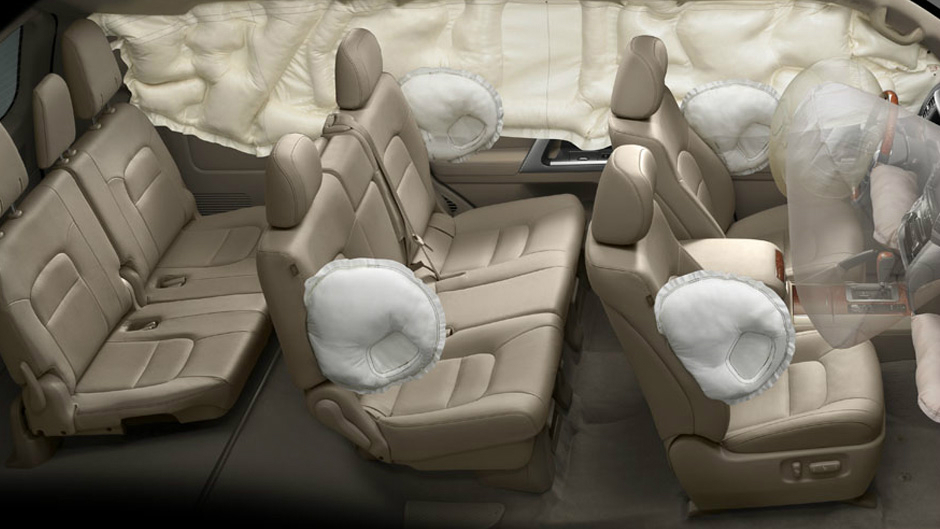
Head SABs are usually mounted in the roof rail above the side windows and are designed to help protect the head in a side-impact crash. There are two types of head SABs: curtain and tubular. Curtain side air bags drop down like a curtain to cover the windows, which means they can also protect passengers from flying glass when the windows break in a crash. The curtain airbag is the preferred method of head protection, and is often accompanied by a seat-mounted “torso” bag. It will protect those in the first 2 rows of seats (but will not always cover the 3rd row in minivans & SUVs with a 3rd row). To see if those in the 3rd row will get protection from the side airbag, see here. Tubular side air bags are also often accompanied by a seat-mounted “torso” bag as shown in the picture below. Tubular Side Air Bag – Image from IIHS.org Chest (torso) SABs are mounted in the side of the seat back or in the door and are designed to help protect the chest in a serious side-impact crash. Head/chest combination (“combo”) SABs are usually mounted in the side of the seat and are typically larger than chest (torso) SABs. Combo SABs are designed to help protect both the head and chest of an adult – they are usually found only for the front seats. Image from IIHS.org Click here to search by vehicle make and model to see if it has side airbags, whether they are standard or optional, as well as whether they protect the head and/or chest, and which rows of seats they cover. If you are buying a vehicle – used or new – make sure the vehicle has SABs – ideally ones that offer head AND chest protection for the front AND back seat passengers. If buying a vehicle with a 3rd row, make sure to pay careful attention as to whether the side airbags extend to protect those in the 3rd row (as many don’t… and you DO want the airbags to offer protection for someone in the 3rd row). YES!!! A study showed that SABs with head protection reduced the risk of death by 37% for drivers in cars and 52% for drivers in SUVs. All data indicates YES. As of 2008, the National Highway Traffic Safety Administration (NHTSA) has investigated over 1,500 crashes where SABs deployed. Sixty of the crashes involved children (ages 13 and under). NHTSA has reported only one child who has been injured by a side airbag; a 3-year old sitting unrestrained in the front seat (of course you wouldn’t let your 3-yr-old ride in the front seat, let alone unrestrained!) who sustained minor facial skin lacerations from the side airbag cover. No children are known to have been seriously or fatally injured by a side airbag. A study of children in side-impact crashes found no increased risk of injury to children age 15 and younger associated with side airbag deployment. Belwadi et al presented at the 2015 ACIP Conference a study of children in real crashes that found that overall, curtain airbags were protective for kids seated next to them. NHTSA continues to closely monitor real-world SAB deployments involving both children and adults. Here is what the car seat manufacturers have to say about the use of their seats and side airbags: The following manufacturers instruct the parent to refer back to the vehicle owner’s manual for information regarding side airbags and child restraint installation to determine appropriate seating locations: The following manufacturers do not mention side air bags at all: The following manufacturers have specific instructions: Evenflo If the rear seat of your vehicle is equipped with side air bags, refer to the following information for proper usage: Vehicles built prior to the 2002 model year: DO NOT use this restraint in a vehicle seating position equipped with a side air bag unless authorized by the vehicle manufacturer. Model year 2002 and newer vehicles: Refer to your vehicle owner’s manual before placing this restraint in a seating position equipped with a side air bag. DO NOT place any objects between the restraint and the side air bag, as an expanding air bag may cause the items to strike your child. Harmony This child restraint may be used in a rear seating position equipped with side impact airbags providing they are: Roof mounted AND “Curtain” type deployment AND Will NOT interfere with, impact or in any way reposition the child restraint when inflated. Please refer to your vehicle owner’s manual for airbag type, and for appropriate use with child restraints. The First Years / TOMY / Lamaze To determine the types of side impact air bag(s) your vehicle may have for individual seating positions, please refer to your owner’s manual. The child restraint may be used in any rear seating position equipped only with side impact airbags that are roof mounted with “curtain” type deployment. For all other vehicles with other types of side impact airbags, please refer to your specfic vehicles owner’s manual for appropriate use of child restraints, or call the automobile manufacturer for more information.


What You Need to Know About
Side Air Bags & Kids